


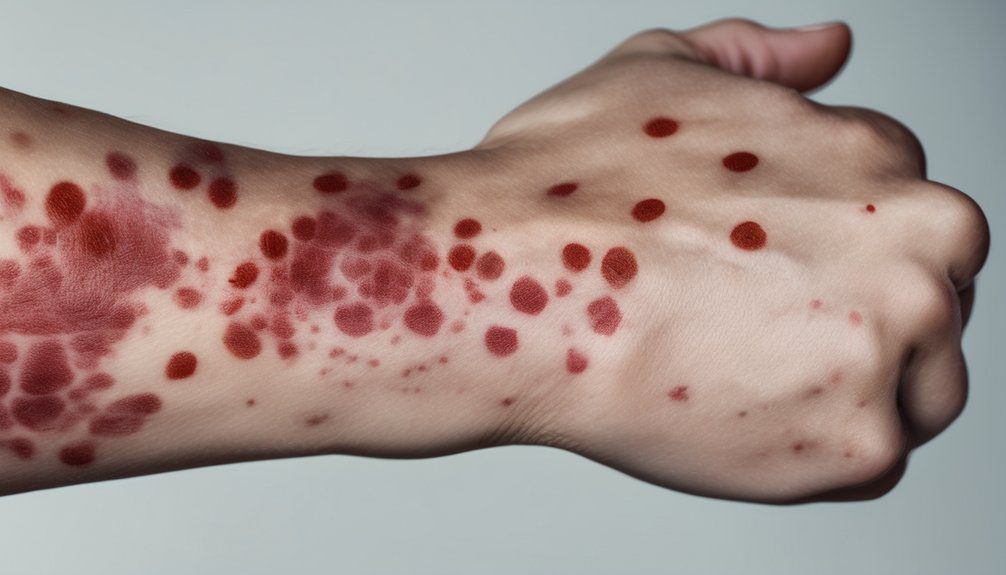
You should see a doctor if your red spots spread quickly, cause severe pain or swelling, develop blisters, or come with a fever, as these may signal serious infections or allergic reactions. Also seek medical advice if the spots change in size, color, or texture or if itching and swelling worsen. Early evaluation helps identify the cause and guide treatment effectively. Further information will clarify how to distinguish between common and concerning symptoms.
Common Causes of Red Spots on the Skin
Although red spots on the skin can appear for various reasons, understanding their common causes helps you identify when to seek medical advice.
Often, sun exposure leads to red spots as your skin reacts to ultraviolet rays, causing irritation or sunburn.
Another frequent cause is heat rash, which occurs when sweat ducts become blocked during hot or humid conditions, resulting in red, itchy bumps.
Both conditions typically resolve with proper care, such as cooling the skin and avoiding further sun exposure.
Recognizing these causes allows you to address symptoms early and maintain your skin’s health effectively.
Identifying Serious Symptoms Associated With Red Spots
When red spots on your skin come with additional symptoms, they may signal a more serious condition that requires prompt attention.
Watch for serious symptoms such as sudden spreading, intense pain, swelling, or blistering. Fever combined with red spots can also indicate underlying infections or skin complications.
If you notice changes in size, color, or texture, or if the spots don’t improve within a few days, seek medical advice. Identifying these signs early helps prevent further complications and guarantees you receive appropriate care without delay.
Don’t ignore persistent or worsening symptoms linked to red spots.
When Red Spots Indicate an Allergic Reaction
Red spots on your skin can sometimes signal an allergic reaction, especially if they appear suddenly after exposure to a new substance.
Allergic reactions often cause skin rashes that may be itchy or swollen. You should pay attention if you notice:
- Rapid onset of red spots following contact with allergens like plants, foods, or medications.
- Accompanying symptoms such as itching, hives, or swelling around the spots.
- Spread of the rash beyond the initial area without improvement.
If these occur, it’s wise to seek medical advice to manage allergic reactions effectively and prevent complications.
Red Spots and Infectious Skin Conditions
Since infectious skin conditions often cause red spots, it’s important to recognize their characteristics and potential causes.
Viral rashes typically appear as widespread red spots and may be accompanied by fever or fatigue. Bacterial infections often produce localized redness, swelling, and sometimes pus.
Both types can result from direct contact with infected individuals or contaminated surfaces. While some viral rashes resolve on their own, bacterial infections might require medical attention to prevent complications.
Understanding these signs helps you decide when to seek care, ensuring you maintain your freedom without unnecessary restrictions or delays in treatment.
Diagnostic Steps and Treatment Options for Red Spots
Although red spots on the skin can stem from various causes, accurately diagnosing their origin is essential for effective treatment.
You’ll likely undergo specific diagnostic methods, such as:
- Physical examination to assess size, shape, and distribution.
- Laboratory tests, including blood work or skin scrapings, to identify infections or allergies.
- Biopsy in uncertain cases to rule out serious conditions.
Once diagnosed, treatment options vary depending on the cause—ranging from topical creams and antihistamines to antibiotics or lifestyle changes.
Understanding these steps helps you make informed decisions and seek appropriate care promptly.
Frequently Asked Questions
Can Certain Foods Cause Red Spots on the Skin?
Yes, certain foods can trigger food allergies that cause skin reactions like red spots. You should watch what you eat, since avoiding allergenic foods helps you stay free from uncomfortable skin issues and enjoy your life fully.
Are Red Spots on the Skin Contagious?
Red spots on your skin aren’t always contagious, but some contagious skin conditions can cause them. To protect your freedom, practice red spot prevention by maintaining hygiene and avoiding contact with infected individuals whenever possible.
Do Red Spots Always Itch or Cause Discomfort?
Red spots don’t always itch or cause discomfort. Sometimes, allergic reactions or skin conditions bring itching, but other times, you might feel nothing. Pay attention to your body’s signals and seek help if symptoms worsen.
Can Stress Trigger Red Spots on the Skin?
Yes, your stress response can trigger skin reactions like red spots. When you’re stressed, your body releases chemicals that affect your skin, causing flare-ups. Managing stress helps you keep your skin calm and free.
How Long Do Red Spots Typically Last Without Treatment?
You can expect the duration of red spots to vary, usually clearing within a few days to two weeks. Your healing timeline depends on the cause, so monitor changes and enjoy the freedom to seek treatment if needed.