

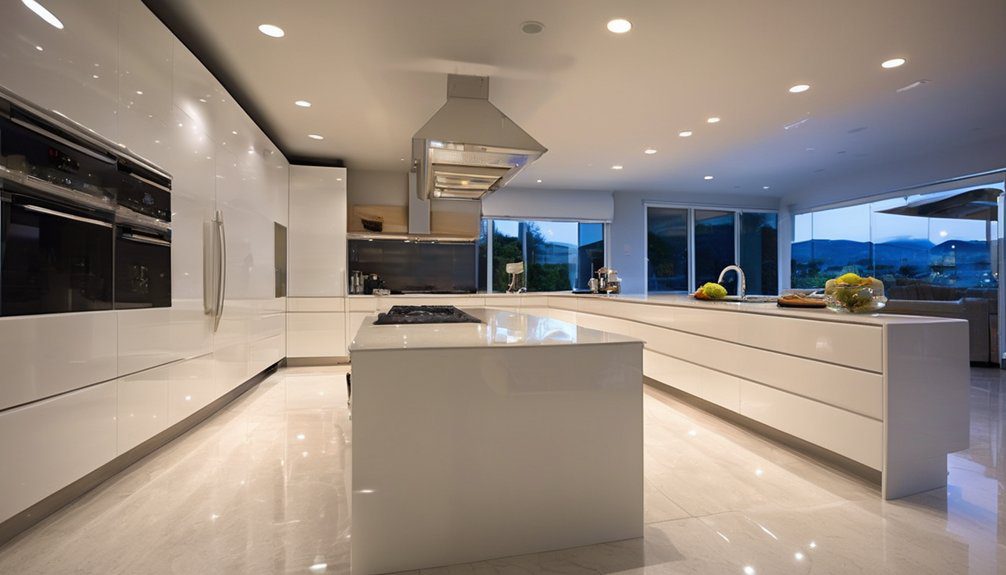
For kitchen LED strip lights, aim for high lumen output to guarantee bright, even illumination on your workspace, preventing shadows. Choose a diffuser made from acrylic or silicone for smooth, glare-free light that enhances visibility. Pair this setup with a color temperature between 3500K and 4100K for balanced, neutral lighting that aids tasks. Proper mounting and power supply setup also maintain consistent brightness and efficiency. Explore further details to enhance your kitchen lighting setup effectively.
Understanding Brightness Levels for Kitchen LED Strip Lights
Brightness is a key factor to take into account when selecting LED strip lights for your kitchen. You measure brightness using lumens, which indicate how much light the strips emit.
For effective kitchen lighting, you want even light distribution to avoid shadows on your countertops. Uneven brightness can make tasks harder and reduce your kitchen’s functionality.
Consider LED strips with a high lumen output and consistent light distribution to guarantee your workspace is well-lit. Understanding these brightness measurements helps you choose lights that provide the clarity and freedom you need for cooking and preparation.
Choosing the Right Color Temperature for Kitchen Lighting
While selecting LED strip lights for your kitchen, understanding color temperature is essential because it affects both the ambiance and functionality of the space.
Color temperature, measured in Kelvin, influences the lighting ambiance by determining whether light appears warm, neutral, or cool.
Warm tones (2700K-3000K) create a cozy atmosphere, ideal for relaxed dining areas.
Neutral whites (3500K-4100K) offer balanced lighting suitable for general kitchen tasks.
Cooler temperatures (5000K-6500K) provide bright, daylight-like illumination, enhancing visibility for detailed work.
Choosing the right color temperature lets you customize your kitchen’s environment to fit your lifestyle and improve overall usability.
Types of Diffusers and Their Impact on Light Quality
Because diffusers play an essential role in shaping how LED strip lights perform, understanding their types is important when planning your kitchen lighting.
Common diffuser materials include acrylic, polycarbonate, and silicone, each offering distinct light diffusion properties. Acrylic tends to provide smooth, even diffusion with good durability, while polycarbonate is more impact-resistant but may create slightly harsher light.
Silicone diffusers are flexible, allowing for versatile designs and softer diffusion. The choice of diffuser material directly affects light diffusion quality, influencing glare reduction and the uniformity of illumination.
Selecting the right diffuser helps you achieve balanced, comfortable lighting tailored to your kitchen’s needs.
Installation Tips for Optimal LED Strip Light Performance
Choosing the right diffuser sets the stage for how your LED strip lights will look and feel in your kitchen, but proper installation guarantees they perform at their best.
Start by selecting mounting techniques suited to your kitchen’s layout; adhesive backing works on smooth surfaces, while clips provide extra security on uneven areas.
Pay close attention to wiring considerations—verify connections are tight and wires are neatly routed to avoid damage or interference.
Test your setup before finalizing installation to confirm even brightness and proper function.
Following these steps guarantees your LED strip lights deliver consistent, high-quality illumination.
Energy Efficiency and Longevity of Kitchen LED Strip Lights
Since kitchen lighting often runs for extended periods, focusing on energy efficiency can greatly reduce your electricity costs.
LED strip lights provide significant energy savings compared to traditional bulbs, using less power while delivering bright illumination.
Choosing high-quality LEDs also extends the product lifespan, meaning you replace them less frequently, which saves money and reduces waste.
Consider strips with efficient drivers and good heat dissipation, as these factors help maintain performance over time.
Frequently Asked Questions
Can LED Strip Lights Be Used Outdoors in Kitchen Patios?
Yes, you can use LED strip lights outdoors on your kitchen patio, but make sure they have outdoor durability and weather resistance. This way, you’ll enjoy vibrant lighting without worrying about rain or sun damage.
Are LED Strip Lights Safe for Food Preparation Areas?
You can safely use LED strip lights in food prep areas if you choose ones with proper LED safety ratings and IP65 or higher. That way, you maintain food hygiene while enjoying freedom in your kitchen lighting choices.
How Do I Clean and Maintain LED Strip Lights in the Kitchen?
You’ll want to unplug the lights first, then use gentle cleaning techniques like a soft cloth with mild soap. Regular maintenance tips include checking connections and avoiding moisture buildup to keep your LED strips shining freely and bright.
Can LED Strip Lights Be Controlled via Smartphone Apps?
Yes, you can control LED strip lights via smartphone apps. With smartphone compatibility, you’ll enjoy app features like color adjustment, brightness control, and scheduling, giving you the freedom to customize your kitchen lighting anytime, anywhere.
What Are the Best Brands for Kitchen LED Strip Lights?
You’ll love Philips Hue, LIFX, and Govee for kitchen LED strip lights. They offer excellent lighting intensity and easy installation tips, giving you freedom to customize brightness and style effortlessly in your space.