



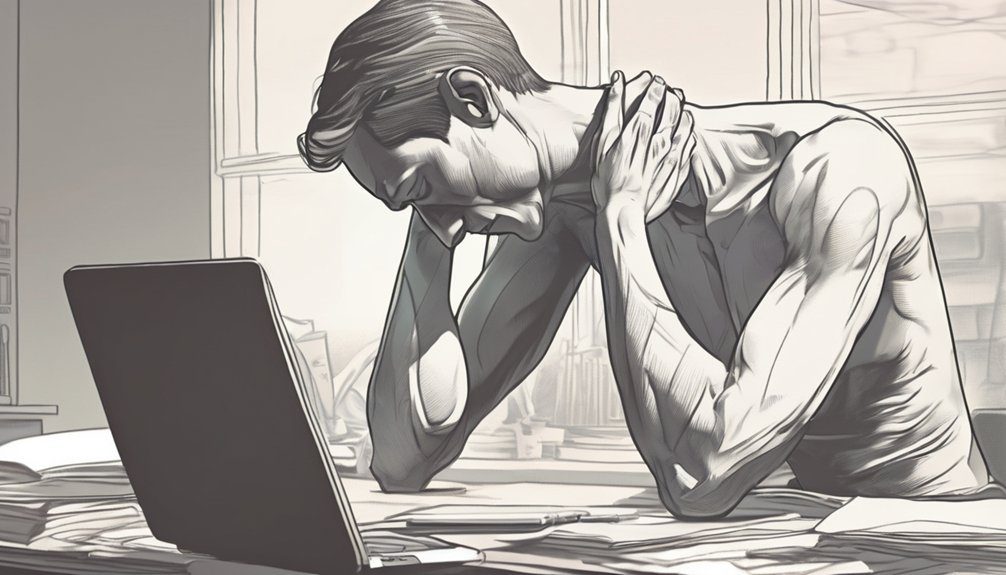
Neck stiffness commonly comes from muscle strain caused by overuse or inadequate rest, leading to inflammation and tightness. Poor posture and poorly set up workspaces also strain your neck by disrupting spinal alignment. Additionally, underlying cervical spine issues, like spondylosis or herniated discs, may contribute to persistent stiffness by affecting nerves and joints. Recognizing these factors can help you manage discomfort effectively, and understanding them further offers insight into maintaining better neck health.
Muscle Strain and Overuse
Muscle strain and overuse are among the most common causes of neck stiffness. When you repeatedly stress neck muscles without adequate rest, tiny tears and inflammation can develop, limiting your mobility.
To promote muscle recovery, you should incorporate regular breaks and avoid prolonged activities that strain the neck. Effective stretching techniques, such as gentle neck rotations and shoulder rolls, help maintain flexibility and reduce tightness.
Prioritizing proper muscle care prevents stiffness and supports your neck’s freedom of movement. Understanding these factors enables you to manage discomfort and maintain a healthy, flexible neck with consistent, targeted care.
Poor Posture and Ergonomic Factors
Although you mightn’t notice it immediately, poor posture and ergonomic factors play a significant role in causing neck stiffness.
When you spend long hours in an ergonomic workspace that isn’t properly set up, your neck muscles endure unnecessary strain. Slouching or leaning forward disrupts the natural alignment of your spine, increasing tension around your neck.
Regular posture correction can help you avoid this discomfort by encouraging proper alignment and reducing muscle fatigue. Adjusting your chair height, monitor position, and keyboard placement all contribute to a healthier posture, effectively preventing stiffness and promoting freedom of movement throughout your day.
Cervical Spine Conditions and Medical Causes
When neck stiffness persists or worsens, it might indicate underlying cervical spine conditions or other medical causes that require attention.
Cervical spondylosis, a form of arthritis affecting the spine, can cause stiffness by wearing down cartilage and bones in your neck.
Herniated discs occur when the soft cushions between vertebrae bulge or rupture, pressing on nerves and limiting your neck’s movement.
These conditions often develop gradually and may lead to chronic discomfort.
If you experience ongoing neck stiffness, consult a healthcare professional for accurate diagnosis and appropriate treatment to maintain your freedom of movement and overall well-being.
Frequently Asked Questions
Can Dehydration Contribute to Neck Stiffness?
Yes, dehydration symptoms can cause neck stiffness by tightening muscles. You should drink water regularly and follow hydration tips to stay flexible and free from discomfort, keeping your body and mind ready for anything life throws your way.
Does Stress or Anxiety Cause Neck Stiffness?
Yes, stress and anxiety can cause neck stiffness. When you practice stress relief and anxiety management techniques, you free yourself from tension, helping your muscles relax and restoring your freedom to move comfortably without discomfort or restriction.
Can Sleeping Position Affect Neck Stiffness?
Yes, your sleeping position can affect neck stiffness. Make sure you have proper pillow support and a mattress firmness that suits your body. This way, you’ll wake up feeling free and refreshed, without any tightness.
Are Certain Foods Linked to Neck Stiffness?
Yes, certain dietary triggers can worsen your neck stiffness. Inflammatory foods, like processed snacks and sugary drinks, might increase inflammation and discomfort. Choosing anti-inflammatory options helps you stay free from stiffness and move comfortably.
Is Neck Stiffness a Sign of a More Serious Illness?
Yes, neck stiffness can signal serious issues like chronic conditions or neurological disorders. You shouldn’t ignore persistent pain—trust your instincts, seek medical advice, and reclaim your freedom from discomfort and uncertainty.