




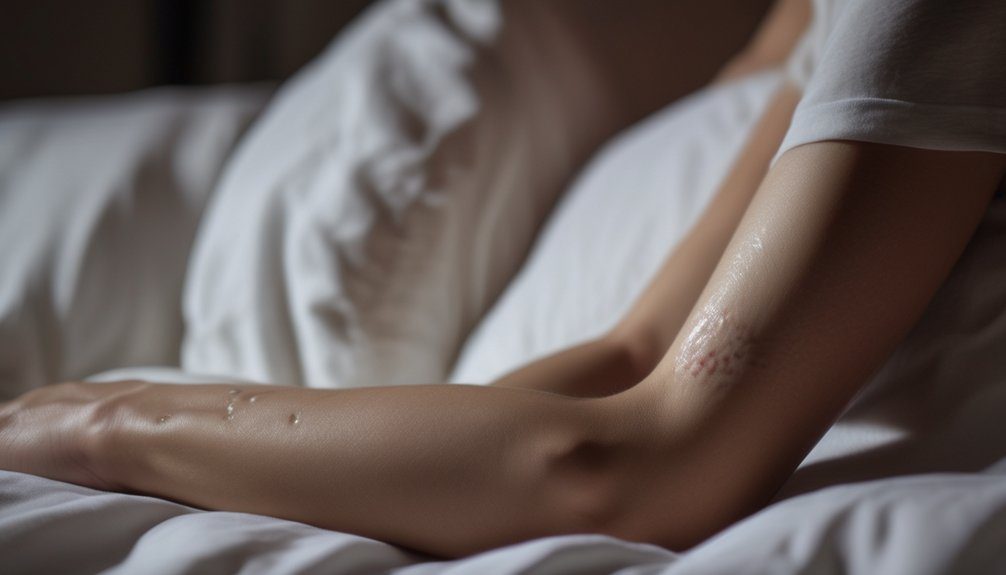
Your skin itches at night due to several known triggers. Conditions like eczema or psoriasis often worsen when you lie down, increasing irritation. Environmental factors such as dry air, temperature changes, and harsh bedding fabrics can dry or irritate your skin. Allergens like dust mites or detergent residues may activate immune responses. Additionally, underlying health issues, including hormonal imbalances or chronic illnesses, can disrupt skin hydration. Understanding these causes helps you manage symptoms more effectively and improves comfort. Exploring these triggers further provides deeper insight.
Common Skin Conditions That Cause Nighttime Itching
Although itching can occur at any time, certain skin conditions are more likely to cause discomfort during the night.
When you experience eczema, nighttime itching often intensifies, making eczema management essential to reduce irritation and improve sleep quality.
Similarly, psoriasis symptoms, such as red, scaly patches, can also worsen in the dark hours, increasing the urge to scratch.
Understanding these conditions helps you take targeted actions, like using moisturizers or prescribed treatments, to control symptoms effectively.
Environmental Factors That Trigger Itching at Night
Several environmental factors can contribute to increased itching at night by irritating your skin or altering your surroundings.
Temperature fluctuations, for example, can cause your skin to dry out or become too warm, both of which may trigger itching.
Additionally, the bedding materials you use play a significant role. Synthetic fabrics or rough textures can irritate sensitive skin, while natural, breathable fabrics tend to reduce discomfort.
Ensuring your bedroom environment maintains a stable, comfortable temperature and selecting soft, hypoallergenic bedding materials can help minimize nighttime itching and improve your overall skin comfort during sleep.
Allergies and Irritants Linked to Nighttime Itching
When your skin itches at night, allergens and irritants in your environment often play a significant role.
Allergen exposure, such as dust mites or pet dander in your bedding, can trigger an immune response causing itching. Skin irritants like certain detergents, soaps, or fabrics may also aggravate your skin’s sensitivity during nighttime.
These substances disrupt your skin’s barrier, leading to dryness and discomfort that worsen when you lie down. Identifying and minimizing contact with known allergens and irritants can help reduce nighttime itching and improve your skin’s comfort, allowing you greater freedom from irritation as you rest.
How Underlying Health Issues Contribute to Nighttime Skin Discomfort
Beyond allergens and irritants, underlying health conditions can greatly affect your skin’s tendency to itch at night. Conditions such as eczema, psoriasis, or diabetes often disrupt your skin hydration, leaving it dry and more prone to irritation.
Additionally, the stress impact associated with chronic illnesses can heighten your body’s inflammatory response, intensifying nighttime itching. Hormonal imbalances and liver or kidney issues may also contribute by altering your skin’s natural barrier functions.
Understanding these connections helps you address the root causes rather than just the symptoms, promoting better skin comfort and overall freedom from nighttime discomfort.
Frequently Asked Questions
Can Nighttime Itching Be a Side Effect of Medication?
Yes, nighttime itching can be a medication side effect. You might experience allergy reactions or skin irritation from certain drugs. Always check with your doctor if your meds cause itching, so you can regain your freedom comfortably.
Does Diet Influence Nighttime Skin Itching?
Yes, your diet can influence nighttime skin itching. Food sensitivities and allergy triggers may cause irritation, so you should identify and avoid these foods to enjoy freedom from discomfort and sleep peacefully without itchiness.
How Does Stress Affect Itching During Sleep?
Stress response triggers your body to release chemicals that worsen itching, disrupting your sleep quality. When you manage stress, you free yourself from that cycle, letting your skin calm down and your rest improve naturally.
Are There Specific Fabrics That Worsen Night Itching?
Yes, certain fabrics can worsen night itching. You’ll want to avoid wool irritation since it can be harsh, and be cautious with silk sensitivity if your skin reacts. Choose breathable, soft fabrics so you can sleep itch-free.
Can Hydration Levels Impact Skin Itchiness at Night?
Yes, when your hydration balance is off, your skin barrier weakens, making your skin itchier at night. Keeping hydrated helps maintain that barrier, so you can enjoy freedom from irritation and restful, itch-free nights.