


When installing security cameras, expect to take into account the type you need, such as fixed or pan-tilt-zoom, and features like resolution and night vision. Costs include equipment, labor, and possibly extra materials, depending on the number of cameras and wiring complexity. A reliable power source and proper cable management are essential for smooth operation. Installation involves selecting ideal locations and secure connections to recording systems. To optimize your setup and maintenance, understanding these basics is vital—further details will clarify the process.
Understanding Security Camera Types and Features
Security cameras come in various types, each designed to meet different surveillance needs and environments.
When choosing a camera, you’ll want to take into account camera resolution, as higher resolution offers clearer images, making identification easier. Night vision is another vital feature, allowing your camera to capture footage in low-light or dark conditions, maintaining security around the clock.
Some cameras provide fixed views, while others offer pan-tilt-zoom capabilities for wider coverage. Understanding these features guarantees you select a system that balances your need for freedom with effective monitoring, without compromising on image clarity or functionality during nighttime hours.
Breakdown of Installation Costs and Budget Considerations
Choosing the right camera features is only part of the process; understanding the costs involved in installation helps you plan your budget effectively.
Your installation budget should account for equipment prices, labor fees, and any additional materials needed. Conducting a cost comparison between professional installation and DIY options can reveal significant savings or justify expert help.
Consider factors like the number of cameras, wiring complexity, and mounting locations, as these directly impact expenses. By breaking down each element, you can allocate funds wisely, ensuring your security system meets both your needs and financial limits without unexpected costs.
Technical Requirements and Installation Process Overview
Several technical requirements must be considered before installing your cameras to guarantee peak performance and longevity.
You’ll need a reliable power supply to keep each camera operational without interruption. Proper cable management is essential to protect wiring from damage and maintain a neat setup, especially if you prefer a less intrusive installation.
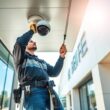
The installation process generally involves selecting ideal camera locations, running cables securely, and connecting devices to your recording or monitoring system. Ensuring these steps are done correctly helps you avoid future maintenance issues and supports clear video capture, giving you freedom and control over your security system’s effectiveness.
Frequently Asked Questions
Can I Install Security Cameras Myself Without Professional Help?
Yes, you can handle DIY installation if you choose simple camera types like wireless models. You’ll enjoy freedom setting them up yourself, but make sure to follow instructions carefully for proper coverage and functionality.
How Do Weather Conditions Affect Outdoor Camera Performance?
Weather conditions like rain impact your outdoor camera’s lens clarity, while temperature effects might cause battery drain or hardware issues. You’ll want weatherproof models to keep your system reliable, no matter how wild the elements get.
Are There Privacy Laws I Need to Know Before Installing Cameras?
Yes, you need to contemplate privacy laws before installing cameras. Focus on camera placement to avoid invading private spaces, and always respect recording consent to protect others’ freedom while securing your property responsibly.
What Maintenance Is Required After Camera Installation?
You’ll need to perform regular camera cleaning to keep lenses clear and check for dirt or obstructions. Don’t forget software updates—they guarantee your system runs smoothly and protects your freedom by keeping security tight and reliable.
Can Security Cameras Integrate With Smart Home Systems?
Yes, your security cameras can integrate with smart home systems if you choose models with camera compatibility for popular smart technology. This lets you control and monitor freely, enhancing your home’s safety effortlessly.